Paid a year of insurance upfront? Is it all deductible now?
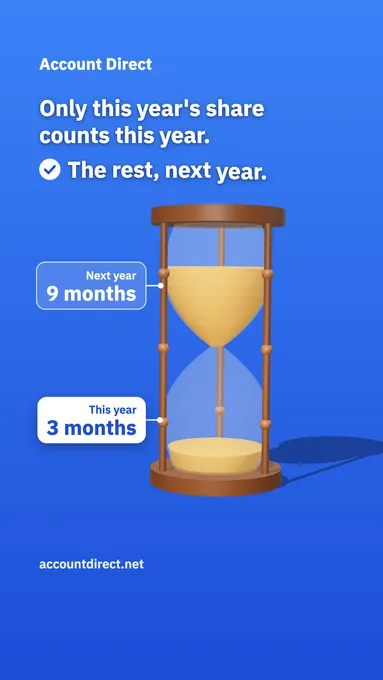
Paying ahead is not deducting ahead
In the fall, many self-employed people and small businesses pay a full year of insurance, rent or a subscription in one go. It is often simpler, sometimes cheaper. The next instinct is to deduct the whole invoice in the year it was paid.
As a rule, that is not how it works. A prepaid expense is deducted in the fiscal period or periods in which you get the benefit, not the one in which you pay it.
An example: insurance paid on October 1
Your fiscal year ends on December 31, 2026. On October 1, 2026, you pay $1,200 for a full year of insurance, from October 1, 2026, to September 30, 2027.
In 2026, the policy covers three months: October, November and December. So you deduct 3/12 of the premium, or $300. The remaining $900 covers nine months of 2027 and is deducted in the 2027 fiscal year.
The same logic works for rent: a year of rent paid on June 30 for July 1 to the following June 30 is deducted half in the first year and half in the next.
Which expenses are affected
The rule covers amounts paid for:
- services that will be provided after the end of your fiscal period;
- insurance for a period after the end of your fiscal period;
- interest, taxes or rent that relate to a period after the end of your fiscal period.
In practice, think insurance premiums, prepaid rent, service contracts and annual subscriptions that straddle two fiscal years.
Nothing is lost
The deferred part is not a lost deduction. It is simply waiting for the right year. Next year, it joins that year's expenses, as long as it has not already been deducted. What matters is writing it down now, so it is not forgotten when the next set of financial statements is prepared.
One note: farmers and fishers who use the cash method of accounting follow different rules for these amounts. Other business income is reported on the accrual method, which is where the rule described here applies.
What we do
We find the invoices in your books that cover more than one fiscal period. We work out the share that belongs to each year, record it in the right place, and carry the rest forward to the next year, so every dollar is deducted at the right time.
Frequently asked questions
Do I lose the part that covers next year?
No. It is not lost, only moved: you deduct it in the next fiscal period, the one in which you get the coverage or the service, as long as you have not already deducted it.
Which expenses does this apply to?
Amounts paid for services to be provided after the end of your fiscal period, and insurance, interest, taxes or rent that relate to a period after the end of your fiscal period.