How does bookkeeping actually work? Three simple steps
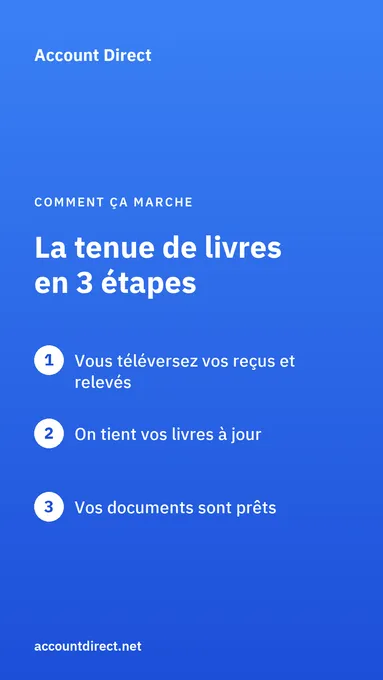
Bookkeeping is simpler than it sounds
Most business owners picture bookkeeping as a pile of admin they will never have time for. In practice it comes down to three steps, and only the first one is yours.
Step 1: You send us what you have
Receipts, bank and credit card statements, supplier invoices, sales records. You upload them as you get them, straight from your phone if that is easiest. There is no scanner to buy, no filing system to design, and nothing to sort first. A clear photo of a receipt is a valid record: the CRA accepts scanned images of paper documents when proper imaging practices are followed, and Revenu Québec accepts records kept on paper, electronic, or computer support.
The only real habit worth building here is doing it little and often. A receipt captured the day you get it takes two seconds. Twelve months of receipts reconstructed in one sitting takes a weekend, and that is where errors and missed deductions come from.
Step 2: We keep your books current
This is the part you do not have to think about. Each document gets categorized, matched against your bank activity, and posted to the right account, so your books reflect what actually happened in the business rather than a guess made months later.
Keeping this current through the year, instead of once at year end, is what makes the numbers useful while you can still act on them. You can see what you are actually spending, whether a job or a month was profitable, and what your sales tax position looks like before the filing date arrives.
Step 3: Your documents are ready when you need them
Because the books are already current, the year end is not an event. Your financial statements, your sales tax figures, and the working papers behind your return come out of records that were kept as the year went, not assembled in a panic at the deadline.
That also covers you if anyone asks questions later. Both the CRA and Revenu Québec require business records and supporting documents to be kept for six years from the end of the last tax year they relate to, and if you file a notice of objection you may need to keep the relevant records longer than that. Because everything was captured and organized as it came in, the proof is already there.
What this means for you in 2026
The value is not that bookkeeping gets done. It is that it gets done on a schedule that leaves you with real numbers during the year, and no scramble at the end of it. Your side of that is step one: send the documents. We handle the rest.
Frequently asked questions
How long do I have to keep my receipts?
The CRA requires business records and supporting documents to be kept for six years from the end of the last tax year they relate to. Revenu Québec applies the same six year period.
Do I have to keep the paper originals?
Generally no. The CRA accepts scanned images of paper documents when proper imaging practices are followed, and Revenu Québec accepts records kept on paper, electronic, or computer support, so a clear and complete digital copy is normally enough.